Women in Physics: A Worthwhile Battle

Darllenwch yn y Gymraeg

In this week’s blog, RCT/Merthyr hub student Beth Lisles talks about women in physics, and why women shouldn’t be afraid of pushing themselves to succeed in a field still dominated by men.

HJ-Seren-Holybush-0801.jpg

If you Google “Women in Physics” the first few hits you get are about the WOP societies at various universities or lists of notable women in the field. However, go down to about the seventh suggestion you get an article entitled “Women in Physics face Big Hurdles – Still”, it takes a critical look at the numbers surrounding the deficit in uptake and continued study of physics and partially apportions it to the lack of female role models in the physical sciences.

This is something that I have observed in my own physics education. I was one of four ladies who started Physics AS and this shrunk by half before the AS exams while the other was accepted into Yale (in the USA) to study Mathematics. This may well have been down to a lack of fellowship and due to the changing nature of their physics education, or the undermined confidence in their abilities. It can happen all too often with young women in physics that they feel their core maths skills aren’t as strong as they should be; this continues into higher education with a proportion of students not undertaking degrees or post-graduate qualifications in physics when their results would prove that they are more than capable.

But is there any real reason for this other than lack of confidence? I don’t think so. Academia has seen the negative effects of its biases, where benefiting from a mostly male viewpoint leads to exclusion of female ideas. As such, positive biases have been instituted to counteract this effect. These include the numerous WOP societies and unions at universities and across the world, as well as the many scholarships offered to undergraduate and post-graduate women. Having applied to the King’s College London Women in Science Scholarship and in researching for this post, finding the Roche University Bursary then drastically trying to complete the application before 5pm, I realised that help is available for us ladies in science if we only look for it. However, it is a bit hidden away.

This made me think again about the role models in our community – the hidden ones and those that are more well known. So, here’s a little list of our lovely lady scientists and their accomplishments:

  • Hypatia – Roman Egyptian, studied and taught mathematics, astronomy and philosophy while there were very few women in science (ca. AD 350/370 – March 415).
  • Maria Goeppert Mayer – Nobel Prize in Physics 1963 for “discoveries concerning nuclear shell structure” (with E. P. Wigner and J. Hans D. Jensen).
  • Marie Curie nee Sklodowska – Nobel Prise in Physics 1903 (with husband Pierre and Henri Becquerel) “in recognition of the extraordinary services they have rendered by their joint researches on the radiation phenomena discovered by Professor Henri Becquerel”. Followed by the 1911 Prize (for Chemistry), shared with Pierre, for their discovery of radium and polonium.
  • Mary Somerville – studied maths and astronomy against the wishes of her father and was the second female scientist to gain recognition in the UK (1780 – 1872).
  • Lise Meitner – a nuclear physicist and part of the team that discovered nuclear fission but was passed over for the Nobel Prize which was awarded only to her male colleague (1878 – 1968).
  • Ada Yonath – the first female Israeli to win a Nobel Prize for her research into ribosomal structure and function using crystallography.
  • Mae Jemison – the first African American woman in outer space and founder of a technology company focusing on applications of technology in everyday life.

In these cases, the women have often had to overcome situations imposed on them by a patriarchal society and break free of the biases placed upon them. If they can do it, so can we. There are role models out there. So ladies, if you need a boost and you’re feeling down about your abilities, skills and prospects take a look at some of these amazing women and use them as inspiration to see just how far you could go.


Top tips on how to prepare for university from a current student

Darllenwch yn y Gymraeg

On this week’s blog, second year Bath student Chelsea Powell, originally from Newport, gives her tips on how to prepare for university and what to do when you get there.

Webp.net-resizeimage

My name is Chelsea, I’m from Newport and study at the University of Bath. I study BSc Social Sciences and have just finished my second year.

Going to university is a really big change for most of us. For the first time ever we are in complete control over what we do, where we go and how we spend our money. It’s exciting to think how much freedom we have! We also have to take responsibility for some boring stuff that we often see our parents doing, like washing, cleaning and cooking for ourselves. Adjusting to uni life doesn’t happen overnight, but here are some of my own top tips to help you out.

Before going:

  • Check that your student finance is all in place, open a student bank account and check what you need to bring with you. It’s great to keep on top of these things as it will save a lot of hassle later on.
  • Take home comforts! Whether it be food or fairy lights, be prepared to make your new room feel homely.
  • If you have limited experience of cooking, cleaning and shopping for yourself, then it may be worth practicing before leaving the comfort of home! If you will be living in self-catered accommodation, you should certainly practice cooking at least a few cheap and simple meals before moving away.
  • Bake/bring something to share with your new housemates. Who doesn’t love free food?
  • Look into the different clubs and societies available before you get to uni. Fresher’s week can be quite a blur so it’s useful to have a rough idea of what you’re interested in by the time you get to uni.
  • Check the uni web and social media pages for induction information for new starters.

checklist pic

When you first arrive:

  • Once you arrive at university it is important to register with a local doctor and dentist- most universities will be near local surgeries and some have their own dedicated surgeries/clinics.
  • As just mentioned, Fresher’s week really can be a blur! A lot happens in the space of that week, so ensure you try to balance things out. Eat well, get a coffee with your new housemates, go to all compulsory induction lectures, familiarise yourself with the campus/area and attend Fresher’s fair events.
  • Keep track of your money. Remember, your student finance needs to last a few months so be realistic about spending, especially during Fresher’s week!It is useful to have a weekly budget, where you allocate specific amounts for food shopping and for leisure and social activities.

Don’t be surprised if adjusting to uni is difficult – many people struggle with the first few weeks or months. All unis have strong support networks in place to help support students to settle in, so feel free to ask for help if you need it. It’s also important to remember that most students will also be living away from home and probably won’t know anyone else at university, so everyone is likely to be in the same boat!

Making the best use of your summer holidays

Darllenwch yn y Gymraeg

This week, RCT/Methyr hub coordinator Stephen Parry-Jones gives his insight on how to make the best use of your summer holidays to prepare for the next academic year.

HJ-Seren-Parry-Jones-3788.jpg

Obviously, having worked your socks off in Year 12, you need a break. But these next weeks give you a chance to get ahead of the game without sacrificing your leisure time.  It will also make next term easier.

Here are some suggestions on how to make the most of your summer:

Read:

  • Order one of the Oxford University Press Very Short Introduction Over 300 titles, all written by leading scholars; they are slim volumes and cost around £8.00
  • Cambridge University Department websites have suggestions for reading on applicants’ pages: tackle at least one major work a few page at a time, or dip into the odd chapter; don’t binge (unless you feel you can cope) – you don’t want mental indigestion
  • Guardian online (free) follow a relevant story – e.g. a legal issue, a medical or scientific development; try to go beyond the obvious – e.g. everyone knows about gene therapy (of course), but what about the CRISPR revolution? Maybe follow the ongoing debate between John Guy (Tudor historian) and Hilary Mantel (Wolfe Hall etc.) about historical truth.
  • New Scientist, Junior BMJ – these are often available to students at discounted rates. The Economist is superb for medicine and science/ technology, believe it or not – not just the would-be bankers.

reading

Listen/ Watch:

  • Look at some University websites for podcasts – some are ten minutes, some full blown lectures. Cambridge, Oxford, Warwick all excellent. (Warwick has some surgical procedures if you’ve got the stomach for it!)
  • Radio 4 podcasts – the Moral Maze, the Ethics Committee (for medics) and The Life Scientific – are painless ways of becoming comfortable with the academic vocabulary needed; you will also be struck by how simply the most brilliant minds express things.
  • If you’re thinking of English, there are some good things on YouTube – e.g. the very young Maggie Smith as Portia in Merchant of Venice. Analyse her performance critically. See if Judi Dench has done anything similar.

Do:

If you’re facing one of the tests like BMAT, MAT or LNAT – remember, they’re designed for able 17/ 18 year olds, not Einstein.

  • Go through the online specimens, which often have worked examples, and maybe order the help books
  • Do a few problems each day until you’ve cracked the technique, and then go on to consolidate it. (Tip: eliminate the wrong answers first in multiple choice tests.)
  • Again, don’t go for the binge approach, unless it suits you. Although they look daunting at first, things will start to make sense as you become familiar with what the tests are asking for.
  • If you’re thinking of Law, get to the magistrates/ crown court and watch a case. Medics – you can never do enough voluntary stuff. Engineers and geographers – try to do some site visits. Keep a sort of diary of what strikes you: universities want above all to know how an experience affected you, not simply that you’ve done something, however superficially impressive.

It’s a question of little and often: a Cambridge academic told me that reading one poem or solving one maths problem every day would pay huge dividends.

Finally, remember that it’s not a question of being good enough for your university of choice. It’s about getting an edge over the competition. If you don’t do any of the above, you can bet your rivals elsewhere will!!

Good luck – (and do enjoy a bit of sun as well)

5 ways to get the most out of university

Darllenwch yn y Gymraeg

On today’s blog, Manchester University student Meirin gives us his tips on how to make the most of your time at uni.

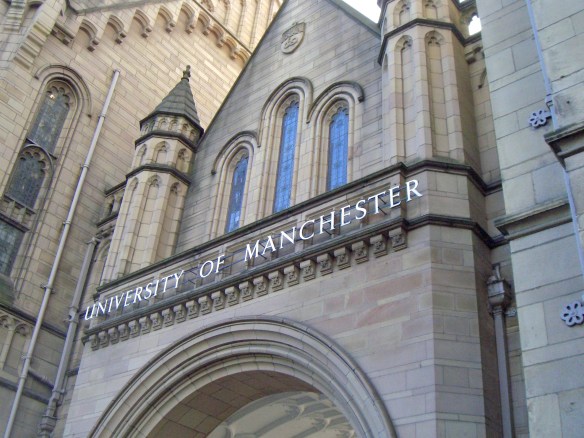
Whitworth Hall, University of Manchester

I’ve just finished my third year studying Physics and already can’t wait to start the next. You may think all degrees last three years, but I’m doing a four year integrated masters course, gives me a nice excuse to stick around longer. Everyone deserves an amazing time at uni, so here are my five tips to help you do so.

  1. Enjoy your modules

Though first year may not count for many courses (you still have to pass), you’ve come to uni to study! Take your time to get used to new learning styles. The more you enjoy your modules at the start, the more you’ll enjoy the rest of your degree and the easier it’ll be.

  1. Join multiple societies

Join societies for interests you already have, you don’t need to try be a different person at uni. Join your course society to get to know your coursemates, and be sure to try something new, maybe something you’ve never heard of!

Having too many friends can’t be a bad thing, and you won’t get bored! Freshers Week and the first few weeks are intended to ease you into uni life, make the most of this time to attend society welcome events.

Meirin2

  1. Join the Welsh society

You immediately have common ground with everyone in this society. If there isn’t one, make one! Welsh societies outside Wales generally aren’t only for Welsh speakers, they also cater for anyone from Wales or even those that aren’t but still have an interest in Wales. If nothing else, a Welsh society will give you a good crowd with whom to watch Welsh sport!

  1. Get to know the people running your society

They might seem a bit intimidating to start with, but these people were in your shoes not too long ago. Getting to know them vastly improves the fun you have with societies as they’ll want to get you more involved.

You also gain an insight into their role and how the society runs. They could then give advice on becoming a “committee member” (the people who run the society) the following year. This is extremely worthwhile and looks great on a CV.

  1. Don’t rush to “get a house”

Many people around you might be talking about getting a house for second year, worried that good houses might be going fast. This isn’t true in most uni cities as there are so many student houses available! Take your time to figure out who you might enjoy living with the most, you don’t need to say yes straight away to the first person that asks. Consider flatmates, coursemates, friends from societies or sports teams, or anyone else you might have met.

Most importantly, have a great time, that’s what uni is for.


How to apply to a US Ivy League university

Darllenwch yn y Gymraeg

In this week’s blog, Bishop of Llandaff student Thomas Burr, who has been awarded a place at Harvard University, gives his insight into applying to a college in the US.

HJ-SEREN-USA-A36P1682.JPG

I probably decided to apply for an American University around halfway through Year 11. I can’t quite remember my exact reasons for wanting to apply. Maybe it was the liberal arts education that meant I didn’t have to specialise straight away. Maybe it was the fact that going abroad for university would surely force me to mature and become more adaptable. Maybe it was just a fun idea. Either way, I looked into it and quickly discovered that applying to a University in the US is a whole different ball game.

For starters, I discovered I wouldn’t be applying for a university; it would be a ‘college’, which is what Americans call undergraduate institutions (they reserve the term ‘university’ for the more mature postgrads). Secondly, I discovered that UCAS becomes pointless; the Common App becomes vital! The Common App is the most commonly used method to submit applications to US colleges and hasn’t got a limit on the number you can apply to. Therefore, forget only applying to 5 unis – you can apply to 55 US colleges if you wanted to! However, with each application to each individual college, there is a fee of around $70 so doing that may cause a hefty dent in your bank balance.

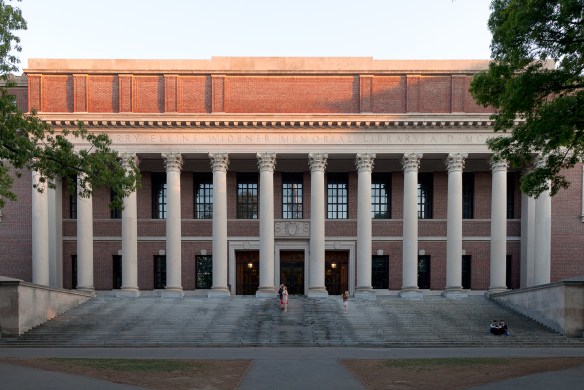
Harvard

A major constituent of a person’s application comes in the form of SAT scores. Though the SAT tests are multiple choice (bar an essay at the end that colleges often require), timing is strict and though the test lasts around 3 hours, it feels more like 30 minutes! Many colleges also require additional SAT subject tests which you can take in maths, science, literature, history or a language. For both these tests, I’d definitely recommend buying a revision guide that you can get pretty cheaply second-hand on Amazon; practice really does help in getting you used to the content and format.

Obviously, the earlier you take them, the more time you have to try again if the first or second attempts don’t go to plan (as mine didn’t!). But even if you take your first one in year 13, you’d be fine! They’re not half as scary as A-Levels and admissions officers understand that internationals aren’t prepped for them as US students are. Besides, the holistic nature of their admissions process means they look at test scores just as highly as that trampoline competition you came first in.

Other constituents of the application are teacher reports and the infamous ‘Personal Essay’. The personal essay is NOT to be compared with your UCAS personal statement – they are VERY different things! Whereas with a UCAS personal statement the emphasis is very much on academics, the US personal essay is focused on you. What makes you stand out? What event has shaped you more than any other? Your personal essay (normally chosen from a range of around 4/5 titles) should reflect your interests and qualities as a person. People write about all sorts of things – examples I read ranged from talking about being short to Winnie the Pooh. Though this may sound crazy, they actually give people the opportunity to really speak from the heart rather than just the mind. It’s likely they’ll also interview you but it’s more of a chat than a grilling; they just want to get to know you in person.

So, I hope I have shed some light on the US application process! It can seem a daunting process that at times can leave you thinking ‘What have I signed up for!?’ However, I’m sure you will get a heap of support (my school was so encouraging for both me and my dearest friend Ben) and trust me; US colleges offer unbelievable opportunities. And if you get just one acceptance letter, it’s worth it.

Why you should consider applying to study in America

Darllenwch yn y Gymraeg

In today’s blog, Seren student Ben Roberts tells us why you should consider applying to study in America, just as he did.

Ben Roberts.JPG

I realised I wanted to apply to an Ivy League university pretty much the moment I considered it on a rainy November evening. But it became a possibility as I put in the research, and it was only when I booked my entrance test that I just began to realise the significance of the process that I was beginning.

A large part of my initial motivation was simply to spread the risk; my reasoning was that if I applied to every world class university I could, I had to get in somewhere (I extensively considered the University of Singapore). I also wanted the excitement. The dream really helped me keep focused on my studies by distracting me a bit.

After applying, I thought it best not to get my hopes up, but upon receiving my acceptance letter, I finally indulged myself in exploring all the amazing options in Princeton. I discovered fantastic international programs for semesters/years abroad; summer internships, research opportunities; and global seminars, which are intensive (optional) courses during the summer holidays.

Another great attraction is the strength of the extracurricular programs, which is outstanding in most top American colleges. Alongside a rigorous academic schedule, students find time to become world-class athletes through intensive training. But if that’s not your cup of tea, there are lots of political, religious, community service and performing arts groups, among others.


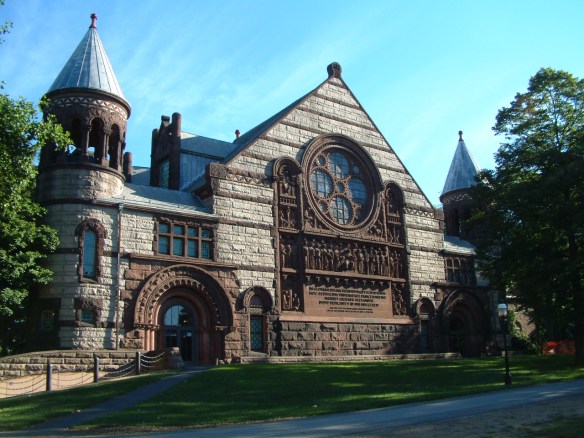
Princeton_University_Alexander

Yet further excitement, alongside a hard decision, came when I was accepted into Oxford to study politics, philosophy and economics (PPE). Considering PPE’s reputation, and Oxford’s recent rankings success, Princeton was perhaps the worse choice on paper, but also the choice I really wanted to make. The benefit of doing something that excites you cannot be understated, but there’s also the growth potential of getting outside your comfort zone, exactly what I feel Princeton was for me. If you are willing to put in the time, and choose the right courses, Princeton’s academics can be just as rigorous, if not more so, than Oxford’s, and the breadth they afforded was invaluable to my own ambitions. There seemed to me so much at Princeton, like many American colleges, that would be a great opportunity for me, but couldn’t be quantified by any rankings.

Ultimately, my decision was made because I believed that Princeton was an exciting place, a challenging place, and a place where I would flourish. Of course, not everyone would make that decision, because there are so many factors affecting each individual differently, but it’s definitely worth considering it.

I leave you with my advice:

  • Be a realistic dreamer – unfortunately, money can be a barrier, but Princeton and other universities are really focussed on broadening access. Do your research in this area.
  • Apply first, worry later.
  • Have high ambitions, but no expectations.

I can honestly say that a decision I made out of winter boredom has been the best decision I have ever, and possibly will ever make.


Five reasons you should apply to the Jesus College summer school for Seren students today

Darllenwch yn y Gymraeg

As you may have previously seen on the blog and across the Seren social media channels, we’ve teamed up with Jesus College Oxford to offer a free four day summer school exclusively for Seren students this August. There are 22 places on offer, which means that two students from each of the 11 hubs will be chosen to attend.

You only have until June 2nd to apply, so if you haven’t made your mind up yet, here are five reasons why you should apply right now:

  1. A taste of life at Oxford University

If you’re considering applying to Oxford, or want to see what it would be like to live and study there, this summer school offers a unique opportunity to experience life at the university. If selected, you’ll be staying in the beautiful surroundings of an Oxford college founded in 1571 and situated at the heart of the city.

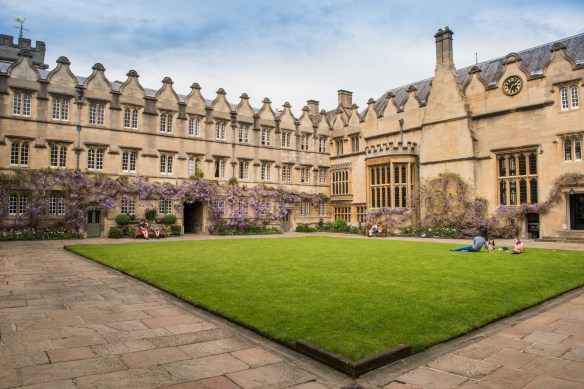
Jesus College by John Cairns

Jesus College by John Cairns

  1. Experience a new way of learning

You’ll have the chance to attend mini-lectures, skills-focused seminars and tutorials with Oxford academics, and experience the type of critical thinking needed when you go to university. The theme of the summer school is ‘Our Future: Humanity in a Hundred Years’, with sessions led by world experts on artificial intelligence, climate change, demography, trade, politics, literature and more.

  1. Meet new people

Although this summer school is exclusively for Seren students and there will only be 22 of you, chances are you will never have met the other participants, and you’ll be able to have discussions and get to know other students from across Wales with similar aspirations to you.

Jesus College by John Cairns

Jesus College by John Cairns

  1. Boost your university application

Applying to a top university can be very competitive, which is why writing a strong personal statement is important. Gaining a place at an exclusive summer school at one of the world’s best universities will look great on your application, and also demonstrates that you can apply yourself to a lot of different subjects and disciplines.

  1. Dispel any misconceptions you might have

You might not have considered Oxford as an option, or find the prospect of attending Oxford or Cambridge slightly intimidating, and the summer school is a chance for you to see for yourself that this really isn’t the case. The university welcomes applications from all students, and are looking for the best and brightest – which applies to you, as you’re already on the Seren Network!

Applications for the Jesus College summer school close on June 2nd. To apply, go to tinyurl.com/JesusCollegeSummerSchool2017

“I’m so glad that I decided to just go for it, because Oxford has so much to offer”: Why you should apply for the Jesus College summer school for Seren students

Darllenwch yn y Gymraeg

This week’s blog is from Dr Matthew Williams, Access and Career Development Fellow at the University of Oxford, and first year Oxford student Lois from Morfa Nefyn in north Wales.

Jesus College by John Cairns

At Oxford University we take enormous joy from asking big, mind-bending questions. So if you love thinking about the many mysteries of the universe, then you’d fit right in!

This August, one of the university’s colleges (Jesus College) is hosting 22 Seren learners for a summer school. The summer school is in collaboration with the Welsh Government and the Seren Network. Everything is entirely free for you. We’re going to be asking and trying to answer some very big questions! The theme of the summer school is ‘Our Future’, and we will be hosting lectures from the world’s experts on what the future may bring in terms of climate change, information technology, politics, demography, and even literature. You do not need to be studying or intending to study any particular subject, you just need to be interested in what’s over the horizon!

As a specific example, Oxford’s ‘Future of Humanity Institute’ has agreed to give a lecture for the summer school on what risks to our survival will likely emerge in the coming century. We have also secured a talk from an expert on climate patterns to talk about our environmental future.

The main aim with the summer school is to dispel the myth that ‘Oxford isn’t for people like me…’ Oxford is for anyone who loves learning. If you don’t believe, me take it from Lois, a first year student from Wales:

Lois Oxford student

In my first year at sixth form, I was encouraged by my teachers to think about applying to Oxford. What?! I thought. Oxford isn’t the place for someone like me! As a first year now studying French at Jesus College, I can confirm that I was wrong.

But why did I think this? My teachers obviously believed that I had the potential, or else I wouldn’t have been encouraged to apply. It was most likely because I hadn’t heard of many people from my area that had been through the process of application, let alone people who had been students there. So, it just wasn’t something that had crossed my mind.

No, not everyone knows exactly what they want to do or where they want to go at the age of sixteen, I definitely didn’t.

But, I decided to sign up for one of the Modern Languages Open Days at Oxford in May of lower-sixth, as by then I knew I was interested in studying French. I remember the long car journey I took from the small village of Morfa Nefyn to the City of Dreaming Spires, not really knowing what to expect. I must admit I was sceptical at first, but as I walked down the High Street towards the open day event at Examination Schools my uncertainty disappeared.

Jesus College by John Cairns

Captured by Oxford’s charm, I instantly knew that I wanted to apply. The place was full of students of all backgrounds, young people just like me, and after my visit I felt totally inspired. I spoke to some of the current students about their courses and had a look around the different colleges. Before the end of the day I had decided that I should apply. After all, what did I have to lose?

After sending my application to Jesus in October, I was invited to interview in December. Over the four days of interviews I got a glimpse of what college life in Oxford might be like, and it was such an amazing experience. By the start of January I was given an offer to read French, and by now I’m here, in the middle of an exciting and vibrant academic environment.

I’m so glad that I decided to just go for it, because Oxford has so much to offer. I hope that more and more students from Wales and my area do take the leap and realise that you have something to offer at Oxford too. You never know, you might just fall in love with the place. Cer amdani! You have nothing to lose!

If you’d like to apply for the summer school, please follow these links and fill in an application by June 2nd:

http://tinyurl.com/YsgolHaf2017ColegyrIesu [Welsh]

http://tinyurl.com/JesusCollegeSummerSchool2017 [English]

My UNIQ experience and why Seren students should apply to the Jesus College summer school

Darllenwch yn y Gymraeg

In this week’s blog post, Ysgol y Strade student Luke Thomas tells us about his experience at the UNIQ summer school last year.

When I started year 12 I had no idea what I wanted to study at university, so I spent my summer attending workshops, summer schools and gaining experience in a range of different fields in order to try and find out what exactly it was that I wanted to study, and decided to apply for the UNIQ summer school at Oxford University.

Luke Thomas - Oxford Bop

Luke and his UNIQ classmates at the Bop party

I chose to study Biochemistry at summer school since it was the broadest subject that was offered. The planned activities would have given me a talking point for a range of different subjects; medicine, biomedical sciences, engineering and, well, biochemistry! The application process was relatively easy, I had to write a short personal statement (2,000 characters) and fill in an online form about myself and where I came from. For many, including myself, this was the first personal statement that I had going to write so the organisers provided plenty of guidelines on how to write a successful personal statement.

The main misconception many have about Oxford and Cambridge is that it is full of ‘snobs’. But for me, I had another worry. Whatever university you choose, there will always be students of different backgrounds, including Oxford and Cambridge, so that didn’t bother me. But my main worry was that the summer school was going to be full of my idea of stereotypical Oxbridge candidates – a bit socially awkward and intimidating. I could not have been more wrong. Everybody that I made friends with on the course had the exact same worries, but within an hour of meeting everyone I knew that I could not have been more wrong.

At the summer school itself, the days mostly consisted of workshops. We’d spend the morning being briefed on the work that we were going to do and the afternoons were spent working in the lab. The whole course was structured so that we had an idea of what it’s like to study at Oxford, so each night, a variety of activities were planned so that we could see that the students there also have a chance to enjoy themselves. Two of the nights were spent at college allowing us to get to know the people there. On another night, we attended a formal in our subject groups, and there was also a guest speaker who had attended the university. On the last night, we all went to a Bop which is basically an Oxford party.

The summer school at Oxford made me realise how easily I get bored, not of a subject, but of studying the same subject. As a result, I realised that I needed a course where I could study a variety of subjects. After a bit of research, I decided to apply to Cambridge to study natural sciences, where I get to study different subjects tailored to me so that I don’t get bored! If it wasn’t for Seren, I would not have had the opportunity to attend the summer school. It was the Seren Network which informed my school about UNIQ and gave me the opportunity to apply. Seren also had arranged a personal statement workshop which helped us write successful applications, not only for UNIQ, but also for our UCAS application.

The summer school at Jesus College is also an amazing opportunity for Seren students, as it offers the chance to experience life at the university, just as I did, so you should definitely make the most of it and apply!

Applications for the free Jesus College summer school for Seren students are open until June 2nd. To apply, go to: tinyurl.com/JesusCollegeSummerSchool2017

Making Successful Applications to University – Part 1: Choosing the right course

Darllenwch yn y Gymraeg

This week’s blog is from Rhys Phillips (originally from Blackwood), UK Student Recruitment & Outreach Officer at University of Southampton, with his advice on choosing the right course.

Southampton University logo copy

When thinking about university applications, two words usually spring to mind: Personal Statement. Whilst it is true that a strong personal statement is vital to making a successful application to university, I would argue that it is actually the final stage of an applications procedure that should realistically begin now for Year 12 students. For the purposes of this post, I am going to break these procedures down into three separate areas and address them over the coming weeks. This week we will focus on the first stage of making a successful application: choosing the right course.

Choosing the right course

Do you know your future career? If ‘yes’, then you are already well on the way to choosing the right course. Websites such as Prospects and Unifrog offer guidance by career aspirations and can help you choose a suitable course to help further that goal. If you answered ‘no’, then do not panic. There are many more like you and a solid career aspiration will often come with time. One thing you must ask yourself in this instance is ‘What really interests me?’ The majority of undergraduate degrees last for three years, longer if you opt for a year in industry or abroad, so what really interests you? You will need to maintain that interest for the duration of your degree, so choose wisely.

Once you have chosen a course or subject area, you now need to think about institutions. UCAS course search is a great place to start and will list all institutions that match your individual preferences. From here you will be able to view key course information and link directly to the provider’s website. One of the most valuable pieces of material here is the list of modules available for individual courses.

Remember that due to academic specialisms, although universities may offer similar courses by name, they often differ quite considerably from institution to institution. The challenge of this can be countered by viewing the modular detail for each course, thereby allowing you to view specific details about the topics you will cover over the duration of your studies.

southampton

When you have drawn up a shortlist of courses, it is worth considering the reputation both of the institution and the individual course itself. The Complete University Guide is a fantastic ‘all-in-one’ resource that allows you to compare both institutional and course specific performance. Remember that although an institution may rank highly in the league tables, your chosen course may not and vice-versa. You should also look at employment rates upon graduation, with Unistats providing a free and convenient way to check employment and accreditation rates six months after graduation, as well as average graduate starting salaries.

Finally, you should consider the wider reputation of your chosen institution, such as whether they are part of the Russell Group and the strength and quality of their research output. The Russell Group represents 24 leading UK universities which are committed to maintaining the very best research. Russell Group graduates are highly sought after by employers, both nationally and internationally. Eleven of the top 50 universities in the world, as ranked by employers, are Russell Group universities and graduates from Russell Group institutions earn on average 10% more than graduates of other universities over a lifetime[1].

Next time we will look at the next stage of the application procedure: enriching your application.

[1] http://russellgroup.ac.uk/about/facts-and-figures/