Event Announcement: You’re invited to Seren 2018: Above and Beyond

Hi, I’m Dr Dylan E. Jones and I am the Dean of Education and Head of the Institute of Education at UWTSD.

Last year I hosted the Seren Network National Conference, I am delighted to announce that this year it will be held again on 4th, 5th or 6th December 2018 at Cefn Lea Park in Newtown and that all year 12 Seren students are invited.

Dr Dylan

I will have the pleasure of hosting this hugely successful event again, this year. As a former head teacher in south-Wales, I know what a fantastic opportunity this event is for Wales’ young people and school professionals.

But don’t just take my word for it, the feedback from last year’s conference really demonstrated the widespread benefits of attending the conference.

What did students make of Seren 2017?

A huge 91% of those that attended agreed that they had found the conference to be an extremely positive experience, the best things being;

  • Access to and the number of universities present
  • The amount of information gained on applications, university life and courses available
  • Attending a specific session

Students commented that the ‘best bits’ included;

“Showed me different career paths I didn’t know were possible to pursue due to doubting myself.”

“That there was more than one opportunity to visit the University stalls as I found myself visiting stalls I didn’t think of visiting the first or second times.”

“Found out lots of information. I am a lot more confident about trying to apply for the bigger universities.”

What did professionals make of Seren 2017?

Teacher, lecturer and support staff from schools and colleges across Wales indicated that they felt attending the conference had increased their students’ motivation to apply, and knowledge of how to apply to a leading university:

  • 80% of students were more likely to attend open days
  • 78% were more motivated to apply to a leading university
  • 75% were more confident in planning to apply for a leading university or course
  • 80% were more knowledgeable of what it takes to successfully apply to a leading university

Comments from professionals regarding the benefits included;

“Having an opportunity to learn and share with a range of contributors from across the UK so that we are better able to support our pupils.”

The opportunity for professional development and to meet other professionals was also welcomed by staff with one responder highlighting “the opportunity to talk with other professionals” as a particular benefit.

Those are just a few of the many reasons to attend Seren 2018. I will look forward to seeing you all there and indeed to delivering the ‘Maximising your Bilingualism’ session, for our Welsh speakers.

We’ll be posting more detailed information about sessions and how to make the most of the conference over the coming weeks.

For now though, happy booking!

I advise you to book soon to avoid disappointment!

Your personal statement – what not to say

Writing a personal statement can be one of the more difficult tasks associated with university applications.

You might be able to write a 2,000-word essay on modern British history in no time at all, or investigate numerical methods of solving equations with your eyes closed, but producing a piece of work about entirely about yourself – your skills, experience and ambition – can be another matter entirely.

The personal statement is one of the most significant aspects of a university application; it’s your opportunity to sell yourself to the institutions you want to attend. In fact, it might be the only opportunity you get, as not all universities hold interviews.

That is why it is important to not only get it right but also to make sure it stands out.

computer-desk-email-7112

UCAS has a useful guide to writing a personal statement on its website, including answers to commonly asked questions, video advice from admissions tutors and links to other helpful online guides.

There’s even a personal statement tool to help you think about what to include and how to structure it, with a handy character count to make sure you don’t go over the limit.

But what about those things that you should not include – the irrelevant, the unhelpful and the inappropriate? Knowing what to leave out is as important as what to put in, so here are a few top tips on what not to say in a personal statement:

  • Do not mention a specific university. You should keep the names of individual institutions out of your statement. Admissions tutors will think you only want to attend their university anyway.
  • Take care with humour, such as irony, sarcasm, wit or ‘funny’ quotes. These can be distracting and potentially off-putting to admissions tutors, especially if they do not share your sense of humour.
  • Avoid using jargon and overly complex language. You might think you’re helping your chances by including long words and academic terms, but really you’re making your statement more difficult to read. Admissions tutors want to know about you, so write in a natural and enthusiastic style using simple language.
  • Again, admissions tutors want to know about you; not Voltaire, not Shakespeare and definitely not Homer Simpson. So leave other people’s quotes out.
  • Negative comments. This is your opportunity to sell yourself, so trying to explain or excuse why you didn’t achieve or failed to complete something will only detract from that. Focus on the positive.
  • Clichés. Admissions tutors read hundreds of personal statements, and many will include the same over-used words and phrases that don’t say anything, such as ‘ever since I was young’ and ‘I have always been interested in’. Perhaps the most over-used cliché, and therefore the least helpful to your application, is the word ‘passion’ or ‘passionate’.
  • Incorrect spelling and grammar. This one should go without saying, but a surprising number of personal statements still contain the most basic errors with spelling, grammar and punctuation, often ensuring they are the first to be discarded. Before you hit ‘send’, make sure you are certain it contains no errors; read it through thoroughly multiple times, use spelling and grammar software and ask someone else to proofread it.

Download our student and parent brochures

Are you a new Seren Network member or Seren parent?

If you didn’t have the chance to grab a copy of our 2018 welcome pack at one of our hub launches, download a copy today.

English 1

The brochures contain all the essential information you need to know about the Seren programme including how the Network supports learners and as well as key dates, case studies, information about your hub and upcoming opportunities.

Download your copy of the student brochure and our separate parent brochure here:

Seren parent brochure 

Seren student brochure


Studying abroad: Erasmus

If you’ve considered studying abroad you may have heard of Erasmus, the EU-funded student exchange programme.

Erasmus (which stands for European Region Action Scheme for the Mobility of University Students) offers students valuable international experience with the chance to study overseas as part of their degree or undertake a work placement.

Since the programme started in 1987, more than three million students have taken part. At any one time, more than 4,000 students are involved.

architecture-buildings-church-338515

Here are some of the things you should know about Erasmus:

  • The current version of the programme, called Erasmus+, runs from 2014-2020 and combines Erasmus with several other EU programmes for training, youth and sport.
  • To be eligible for the student exchange element, you must be registered at a higher education provider that is part of the programme and enrolled on a course leading to a recognised degree or other qualification of the same level.
  • Your time abroad must be relevant to your degree and benefit your personal development.
  • Placements usually take place in the second or third year of a degree and can last for up to 12 months.
  • You will pay no additional tuition fees as part of the programme, and there are grants available to help towards accommodation and living expenses.
  • More than 1,000 institutions are part of Erasmus, so there are plenty of options.
  • By studying abroad with Erasmus+, you can improve your communication, language and inter-cultural skills and gain the sort of soft skills that will be highly valued by future employers.
  • If you are interested in taking part you should contact your academic adviser or your chosen university’s Erasmus office.

Brexit

The UK’s exit from the European Union, also known as Brexit, could affect the future of EU-funded programmes like Erasmus. The UK Government has confirmed it is committed to continuing full participation in Erasmus+ until 2020, though anything beyond that is uncertain. For up-to-date information, visit the Erasmus+ UK National Agency website.

More information and resources

For information on Erasmus+ in the UK, visit the Erasmus+ UK National Agency website (In Welsh).

For inspiring examples of Welsh involvement in Erasmus+, visit the Erasmus stories page and click the ‘Wales’ filter.

UCAS and the European Commission websites also have more information on the programme.

Open days: Questions to ask and a handy checklist

An open day is the perfect opportunity to find out as much as possible about the university you want to attend and the course you want to study, so you should go armed with a list of questions.

openday1

Here are some you might want to ask:

Application related questions

  • What grades do you need for the course?
  • What if you don’t get the required grades?
  • What qualities are they looking for in an applicant?
  • Do they hold interviews or is selection based on your UCAS application?
  • Is there the opportunity to take a year abroad?
  • Are there scholarships or bursaries available?

Course related questions

  • How is the degree assessed (e.g. exams, coursework, projects etc.?)
  • How many taught/contact hours are there?
  • How many hours of self-directed study are there?
  • Is there a final dissertation?

 Career related questions

  • Will the course improve your employment prospects?
  • Are there work placement opportunities?
  • What careers have previous graduates gone on to do?
  • Do they hold jobs fairs?

General questions

  • What facilities are available on campus?
  • What clubs, societies and sporting activities are available?
  • What is the accommodation like – should you live on or off campus?
  • What are food and drink prices like?
  • What is the entertainment/nightlife like?

For more ideas, Which? University has a detailed list of general questions and a list of subject-specific questions. There is also a list of questions on the UCAS open days tips page.


Checklist

Before you attend a university open day why not print out this handy checklist to make sure you get the most from your experience?

Seren Network open day checklist

□ Make a shortlist of universities you want to view

□ Find the date of their next open day

□ Book a place

□ Arrange transport

□ Book accommodation (if required)

□ Download/print campus map

□ Take a notepad and pen to make notes

□ Pack water and snacks

□ Reserve a place on an organised tour

□ Select talks/lectures/taster courses

□ Prepare a list of questions

□ Arrange to meet staff

□ Arrange to meet students

□ Visit the students’ union

□ View accommodation

□ Check out the town/surrounding area

How to prepare for interviews

Before you’re given an offer from a university, you may be asked to take part in an interview.

Although this is less common practice than it used to be, many universities will still want to speak to you and put questions to you to assess your suitability for the course.

The admissions section of your chosen university’s prospectus or website should tell you if an interview is likely.

Interviews can be conducted in person at the institution itself, or even over a video chat service such as Skype.

As an interview could be the difference between attending the university of your dreams or settling for second choice, it’s important to get it right.

adult-advice-boss-70292 (1)

Here are some tips for how you should prepare for a university interview.

Take it seriously

Whether your interview is described as ‘formal’ or ‘informal’, you should always take it seriously. An informal interview might not be as structured or as rigid as formal interview, but that doesn’t mean it’s any less important.

Predict their questions

The interviewer is going to want to know more about you and why you want to attend their course. They may ask you to expand on aspects of your application and personal statement. Review these documents and remind yourself of what you said, so you can predict what they might ask.

Do some more research

Depending on your chosen course, you might be asked to give your views on the subject area. It is a good idea to do some research on the latest news and developments in the subject before the interview.

Practice

You could ask a teacher, parent or friend to do a mock interview with you focusing on why you chose the course. This will help you prepare your responses and ease your nerves.

Prepare questions of your own

This is your chance to find out more about the course and the university, so write down some questions of your own. This will also demonstrate your interest and enthusiasm to the admissions tutors.

Dress smartly and arrive early

You don’t have to wear a suit and tie, but dressing smartly will show respect and demonstrate that you are taking the interview seriously. You should also plan your journey ahead and leave in plenty of time so you get there early. Make sure you make a note of their phone number so you can let them know if you are going to be late.

More information and resources

UCAS has a useful resource on preparing for undergraduate interviews, including a video how-to guide.

Website Studential also has several pages of resources, including FAQs, tips and sample questions as well as subject-specific guides.

Which? University and The Complete University Guide also have useful interview preparation advice.

My experience at the Yale Young Global Scholars program (YYGS)

Hi, I’m Rianna and this summer I attended the Yale Young Global Scholars program (YYGS) in Connecticut, USA. I’m writing this short blog to give an insight into my experience and encourage students to apply to what was one of the best experiences of my life. I can’t even fit all the best bits into this blog without boring you to tears but hopefully I’ve covered most of it to give you a good idea!


Who am I?

I’m a 17 year old girl going into Year 13. I took biology, chemistry, maths and art (with WBQ) for AS levels and in my spare time I love drawing and music (you might have seen me in the concerts conducting the orchestra.). When I applied for YYGS, I was thinking about applying for either medicine or architecture for university.


What is YYGS?

The program is a two week long course aimed at 15-17 year olds from around the world. It is very established and well attended, with around 250 teens attending each of the six subject specific courses across three fortnight long sessions.

It is an introduction to life at Yale university and includes seminars, lectures, a UN style simulation, and a ‘capstone project’. There is lots more information available on the website, just Google YYGS.

pic 1

(The timetable from the website. Each morning we got an email telling us our schedule for the day.)


How I applied

This year marked the launch of the partnership between the Seren Network and YYGS. The opportunity to attend the $6000 course fully funded by Yale and Welsh government was advertised in Dr Roe’s trusty update emails. It seemed too good to miss, although there was only around a week or so until the deadline. I had to submit one 500 word essay, and two shorter essays around 250 and 100 words. Forms, references, records and financial information were also required. It was stressful and very last minute, I stayed up to write until two hours before the 5 AM deadline. Still, it was a small price to pay for such an amazing experience.


The course I applied for

Of the six options, I chose ‘Sustainable Development and Social Entrepreneurship’ (SDSE) because it tied most closely to architecture, which I had explored less compared to medicine. However, I was very indecisive, changing the three ranked options I chose minutes before applying and I was lucky enough to get my first choice.


My favourite learning experience

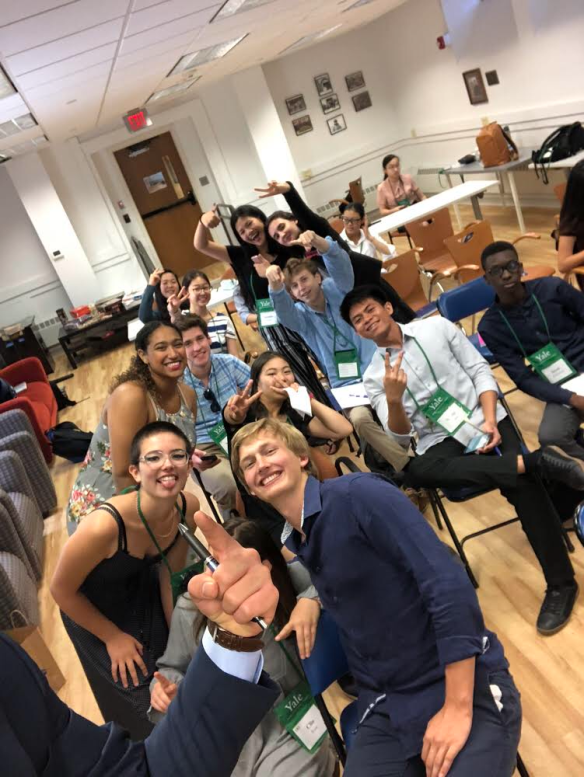
I loved the capstone project. Nearly every night, after dinner, from 6:30-9 pm, our group of 16 students would meet in our basement room and work on our research and presentation. Our instructors Michelle and Rahim were our supportive ‘parents’ who gave us extremely detailed feedback on every submitted essay and donuts on the last day. Under the group umbrella of “Equity and Poverty Alleviation”, my smaller team of four created a presentation of “Empowering the Bottom of the Wealth Pyramid” that looked into sanitation methods that could be used in East African countries. From capstone, I experienced working with strong group to very tight deadlines and writing good quality essays in mere hours. I also made a new family who I missed very much as soon as I left.
pic 2

pic 3

(Our capstone group on presentation day)


My favourite non-learning experience

There were some incredible social events scheduled, most being tradition for YYGS. For instance, the talent show, the speaker series, the late night party on the final night, the quiz night, and the library tours. My favourite was probably the ‘family time’ with our ‘family’ of 8. This was another way we were quickly forced to make friends. Our family didn’t play games like some of the others, but we did get ice cream together, chill in the library basement arguing over which education system was better, and visit my favourite building – the Beinecke Rare Book and Manuscript Library
pic 4

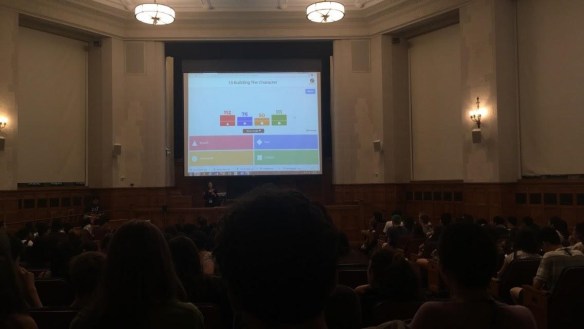
(One of the presentations from the speaker series which used a huge Kahoot game to teach us about writing characters in fiction.)


pic 5

(Our family, The Gr8est, in one of the coolest buildings ever)

My least favourite part

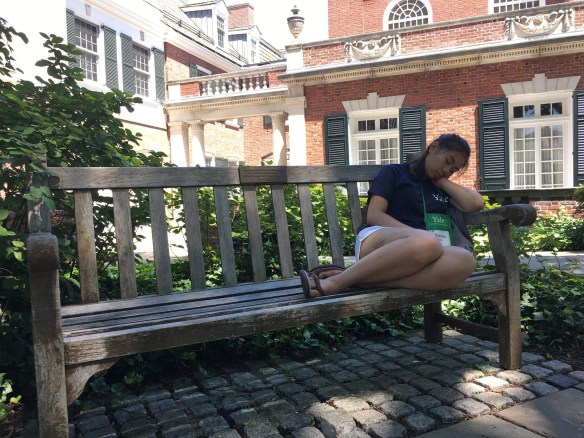
Some days I wasn’t in a great state of mind to appreciate the lectures first thing in the morning because I was so tired. I usually need about 9 hours sleep but having essays due in for midnight or staying up gossiping with my suite-mates often meant 2am bedtimes and waking up at 7am. Still, getting to spend more time awake and making the most of my limited time was definitely worth it, in my opinion.  
pic

(I got caught napping on this bench like three times)

Any regrets?

I wish that I hadn’t gone into the process thinking that I would never attend an American university. Like many, I assumed that the costs would be far too high to even consider and so I didn’t attend the admission talk or panel. It wasn’t until my last day there that one of the instructors (second year Yale students) told me of another instructor who was from Scotland and was able to get huge amounts of financial aid, making the cost equal to that of attending British university. I quickly rushed head first into researching all that I needed to do if I were to apply whilst feeling that it was all a little too late.


My advice

I can’t thank anyone involved with the Seren-YYGS partnership enough. I consider myself amongst some of the luckiest teens in the world to have been able to experience the opportunity, practically for free. I made incredible friends around the world and experienced world class education. It is my genuine belief that this is an unmissable opportunity that makes me so passionate to spread the word and encourage all eligible students to apply. My advice is: definitely apply, you will regret it if you don’t at least give it a go!

Some more pics:
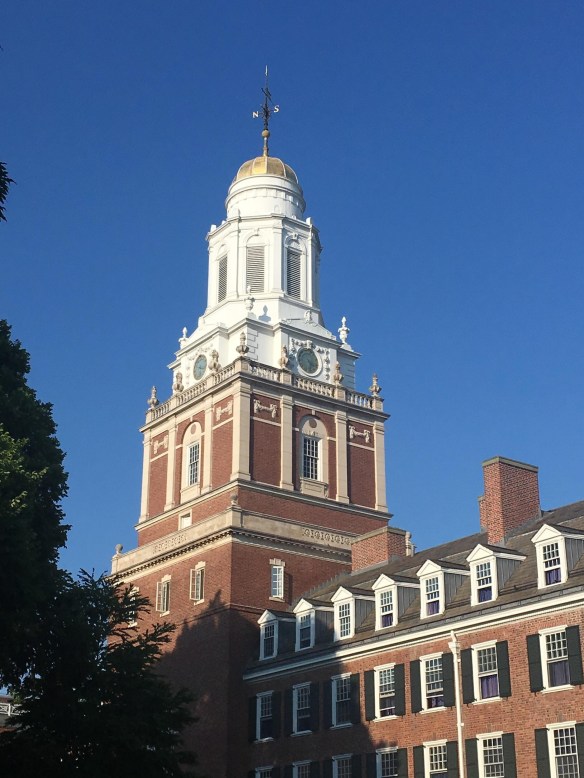
pic 6

(The beautiful Pierson College tower)

pic 8

(My capstone team after graduating, on the lawn of Pierson College where SDSE was held)

pic 9

(My Breakout session group – we met after each lecture to discuss our thoughts)

pic 10

(Group ideas from a seminar about the Flint water crisis)

pic 11

(Me and Marly – the other Welsh student in SDSE from Aber – on the last day)


I also attended the Jesus college summer camp so watch out for the blog about that experience too!

Plus, I will be attending the Seren launch event on September 26th along with some of the other Year 13s who also attended different courses at YYGS. There, we will be able to answer any further questions you have.

Hope to see you there!

Thomas Tiltman – My Seren Summer School Experience 2018

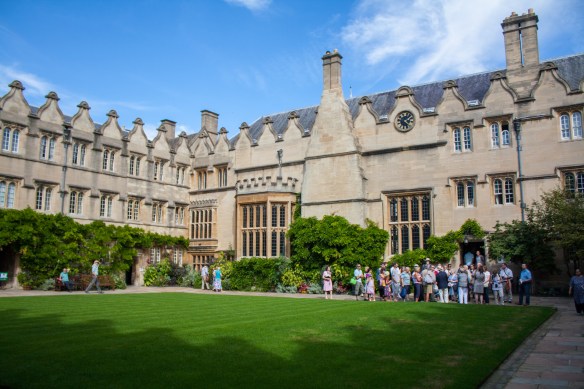
“I was asked to go to Jesus College Oxford for a summer school run by the Seren Network.

“Despite my limited knowledge of this area, I decided to go down for the week. Now, since coming back, I know it was probably the best decision I could’ve made. The wide varieties of lectures and people there made for an unforgettable week.

“Since STEM is my favourite academic area, I was naturally very interested into the various STEM lectures, like ‘logical paradoxes, the development of the foetus and exo-planets’ (my favourite lecture, since planets and the hunt for life has always fascinated me). But I was surprised by how much I enjoyed the other lectures, likely due to how good the lecturers were and how completely in love they are with their subject.

“I honestly expected Oxford to be like the obvious stereotypes, but this wasn’t always the case. I was surprised by how laid back everyone was, even the lecturers. They all felt very down to earth and were happy to help and answer any questions if you didn’t understand something.

“The university itself was somehow very big and small at the same time. The colleges themselves feel quite small and cosy, while the university itself felt huge, since it owns an awful lot of the area around Oxford (a lot of the parks, facilities etc.). Despite this, it still felt homely, and the rooms themselves didn’t feel like generic student rooms.

Jesus_College,_Oxford

“The tutorials themselves were a lot of fun. The small group sizes (at max, three students to one lecturer) made for some interesting debates on our essays, allowing me to learn a great deal and really stretch my ability to come up with clever arguments when trying to play the devil’s advocate. I really think I could learn a lot from these tutorials – if I get into Oxford that is!

“After all of this, I find it hard to not be inspired to apply to Oxbridge. The environment is a lot of fun and the lecturers are all top of their field experts. The students are all friendly and the tutorials are fantastic. Now I just need to tackle the admissions process.

*NB – This autumn, Seren will be running a series of admissions coaching sessions. Stay tuned on the blog and ask your hub coordinator for more information.

How to use your summer break productively following Year 12

The exams are over, school’s out for summer, and you have six weeks off before embarking on a new phase of life as a university student.

It’s understandable if all you want to do now is take time off and think about anything other than studying and revision. After all, you’ve probably spent most of the last two years with your head in a book or staring at a screen, preparing for and sitting exams.

adult-beautiful-beauty-953430

However, the next few weeks offer a golden opportunity to prepare for the rest of your life.

Here are our top tips for using the long summer break productively:

Rest

  • First it is important to make time to rest, relax and recharge the batteries.
  • Take at least couple of weeks off to have a proper break.
  • Go on holiday, have a change of scenery or just go out and enjoy the world; anything that helps refresh your mind and body.

Work

  • If you don’t already have a part-time job you could look for work to see you through the summer break.
  • Working will not only allow you to save some money ready for university, but it will also help you learn some valuable skills that will enhance your CV.

Take an internship

  • A summer internship can also be a great way to experience the world of work and gain useful transferable skills. You’ll also give yourself a head start before your university degree gets underway.
  • If you can find an internship in a company or organisation that is in some related to your degree, or a career you are interested in pursuing, you will also gain a valuable insight that will set you apart from your peers and give you an edge in the competitive graduate jobs market.
  • For more information on internships, visit the Prospects website.

Volunteer

  • Volunteering, whether overseas or closer to home, is another great way to enhance your skills, while helping others in the process.
  • Not only is it a rewarding use of your time, it will also boost your CV.
  • There are many options you could try,  from taking part in an organised volunteering programme to helping at the local charity shop.
  • Website ‘Save the Student’ also has a helpful guide to volunteering.

Prepare for university

  • More study might be the last thing on your mind after two years of rigorous academic effort, but in the last few weeks of your break it is a good idea to start preparing for university so that when you arrive as a fresher you are not totally out of your depth. Buy some of the textbooks you will need and start reading around your chosen subject area.

For more advice on how to make the most of your summer break, check out these useful guides from Prospects and The Complete University Guide.